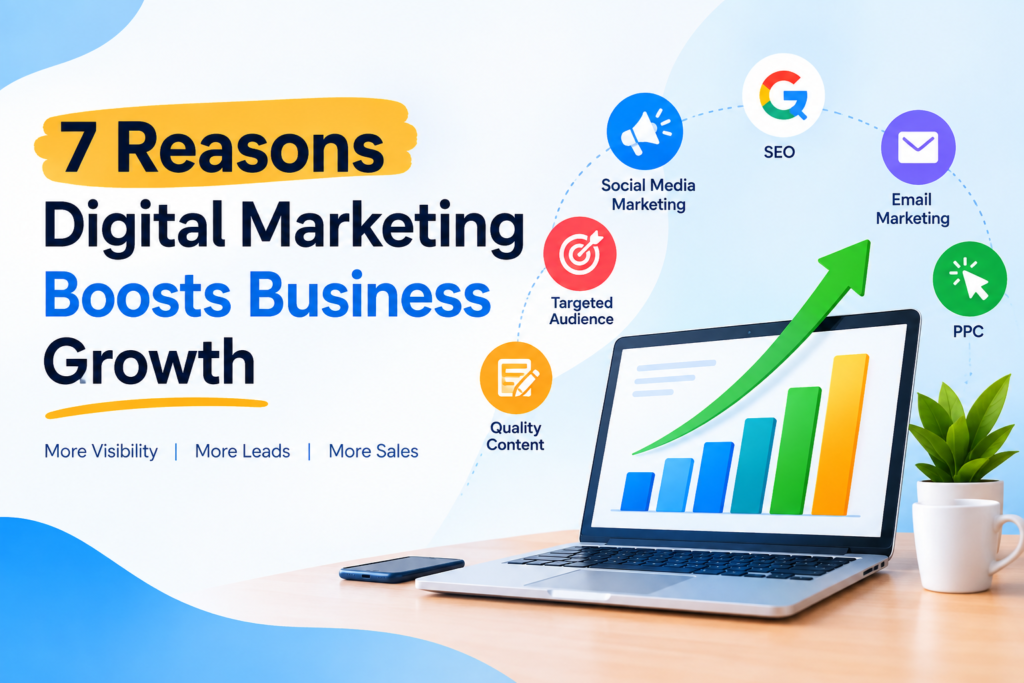
7 Reasons Digital Marketing Boosts Business Growth
7 Reasons Why Digital Marketing Is a Game Changer for Businesses Introduction The way businesses connect with customers has changed dramatically over the past decade. Traditional marketing methods such as newspapers, billboards, and television commercials still have their place, but they are no longer enough to meet the expectations of today’s digitally connected consumers. People now research products online, compare prices, read reviews, and interact with brands through websites and social media before making purchasing decisions. This shift has made digital marketing one of the most important tools for businesses of all sizes. Whether you run a local shop, an eCommerce store, or a multinational company, digital marketing provides opportunities to reach your ideal audience, build meaningful relationships, and generate measurable results. Unlike traditional marketing, digital marketing allows businesses to communicate directly with customers, monitor campaign performance in real time, and adjust strategies based on data. It offers flexibility, affordability, and scalability, making it an essential part of every successful business strategy. In this article, we’ll explore seven key reasons why digital marketing is a game changer for businesses and how it can help you stay ahead in an increasingly competitive marketplace. 1. Digital Marketing Helps You Reach a Global Audience One of the greatest advantages of digital marketing is its ability to remove geographical barriers. A traditional marketing campaign is often limited to a specific city or region, while digital marketing enables businesses to reach customers across the country—or even around the world. A well-designed website, optimized for search engines and supported by social media and online advertising, can attract visitors 24 hours a day. Whether someone searches for your services from a neighboring town or another continent, your business has the opportunity to be discovered. Benefits of Global Reach For small businesses and startups, this level of exposure was once impossible without significant investment. Today, digital marketing makes it achievable. 2. It Is More Cost-Effective Than Traditional Marketing Marketing budgets are often limited, especially for small and medium-sized businesses. Traditional advertising methods such as television commercials, radio spots, newspapers, and billboards can be expensive and difficult to measure. Digital marketing offers a more affordable alternative while delivering highly targeted results. Businesses can choose marketing channels based on their goals and budget, including: Because digital campaigns are measurable and adjustable, businesses can maximize their return on investment without wasting money on ineffective advertising. Cost Advantages Even businesses with modest budgets can compete effectively through smart digital marketing strategies. 3. You Can Target the Right Audience One of the biggest challenges with traditional advertising is reaching people who are genuinely interested in your products or services. Digital marketing solves this problem through precise audience targeting. Businesses can create campaigns based on: For example, a digital marketing agency can target business owners searching for SEO services, while an online clothing store can display advertisements to users interested in fashion. Targeted marketing improves campaign performance because your message reaches people who are most likely to become customers. Why Audience Targeting Matters Reaching the right audience at the right time significantly increases the effectiveness of your marketing efforts. 4. Digital Marketing Produces Measurable Results Unlike traditional marketing, where results are often based on estimates, digital marketing provides detailed performance data in real time. Businesses can monitor: These insights help marketers understand which strategies are working and where improvements are needed. For example, if an advertisement isn’t generating enough leads, businesses can immediately adjust the audience, messaging, or budget without waiting for the campaign to end. This data-driven approach leads to smarter marketing decisions and continuous improvement. 5. It Strengthens Customer Relationships Modern customers expect businesses to communicate with them regularly and provide value beyond selling products. Digital marketing makes it easier to build long-term relationships through multiple communication channels. These include: Responding quickly to customer questions, sharing helpful information, and engaging with online communities builds trust and loyalty. Satisfied customers are more likely to: Strong customer relationships often translate into sustainable business growth. 6. It Builds Brand Awareness and Credibility People are more likely to purchase from brands they recognize and trust. Digital marketing helps businesses establish credibility through consistent online visibility. Several strategies contribute to stronger brand recognition: Search Engine Optimization (SEO) Appearing on the first page of search results increases credibility and helps potential customers discover your business. Content Marketing Publishing informative blogs, guides, and videos demonstrates expertise while educating your audience. Social Media Marketing Regular posts, customer interactions, and engaging content create a recognizable brand personality. Customer Reviews Positive online reviews provide social proof and influence purchasing decisions. Consistent Branding Maintaining a consistent visual identity and messaging across all digital channels strengthens brand recognition. Over time, these efforts position your business as a trusted authority within your industry. 7. Digital Marketing Supports Long-Term Business Growth Perhaps the greatest advantage of digital marketing is its ability to create sustainable growth. Unlike one-time advertising campaigns, digital marketing builds long-term assets that continue delivering value. Examples include: These assets continue attracting visitors, generating leads, and supporting sales long after they are created. Businesses that consistently invest in digital marketing often experience: Digital marketing isn’t simply about immediate sales—it’s about building a foundation for future success. How Different Digital Marketing Channels Work Together The most successful businesses don’t rely on just one marketing channel. Instead, they combine multiple strategies to create a cohesive customer journey. For example: When these channels work together, businesses create a powerful marketing ecosystem that supports every stage of the customer journey. Common Mistakes Businesses Should Avoid While digital marketing offers tremendous opportunities, many businesses fail to achieve the desired results because of common mistakes. Avoid these pitfalls: Digital marketing requires consistency, patience, and continuous improvement. The Future of Digital Marketing As technology continues to evolve, businesses must stay prepared for new opportunities. Some of the biggest trends shaping digital marketing include: Businesses that embrace innovation will be better equipped to adapt to changing consumer expectations and maintain a competitive edge.